

Clinical research has never generated more information than it does today. Modern studies routinely combine electronic data capture (EDC), laboratory results, imaging, electronic clinical outcome assessments (eCOA), wearable devices, remote monitoring technologies, and an expanding array of digital health tools. Each source contributes valuable information, but the growing diversity of data has also introduced new operational challenges.
The issue is rarely a lack of information. Instead, research teams often struggle to connect that information in ways that support timely decision-making. Data may reside in multiple systems, follow different formats, or arrive at different points during the study. As a result, researchers spend significant time gathering, reconciling, and interpreting information before meaningful analysis can even begin.
Artificial intelligence offers a different approach. Rather than treating each data source independently, purpose-built AI can bring information together, identify relationships across datasets, and provide a more complete understanding of study performance throughout the clinical research lifecycle.
Why Clinical Research Depends on Connected Data
Every clinical trial tells a story, but no single dataset tells the entire story.
Participant outcomes may be influenced by laboratory measurements, protocol adherence, patient-reported outcomes, wearable device data, imaging assessments, and countless other variables. Looking at each source individually provides useful information, but understanding how those sources interact often reveals the insights that matter most.
Historically, creating that broader view has required extensive manual effort. Data managers, programmers, statisticians, and clinical operations teams spend considerable time preparing information before analysis can begin. Even after those datasets have been assembled, additional work is often required to ensure consistency across systems.
Purpose-built AI helps reduce that complexity by organizing information from multiple sources within a unified environment. Instead of requiring researchers to manually assemble data before asking meaningful questions, AI provides a connected foundation that supports faster exploration and more comprehensive analysis.
Turning Multiple Data Sources Into Operational Insight
Clinical research platforms have traditionally focused on collecting data accurately. While that remains essential, today’s research environment requires organizations to derive greater value from the information they collect.
TrialKit AI extends beyond data collection by helping researchers integrate information from both TrialKit and external sources. Laboratory data, electronic data capture, patient-reported outcomes, remote monitoring systems, imaging, and other datasets can all contribute to a broader understanding of study performance.
Bringing these sources together creates opportunities to identify trends and relationships that may not be visible when information is viewed in isolation. Study teams can evaluate operational performance more comprehensively, identify emerging patterns earlier, and gain greater confidence in the conclusions they draw throughout study execution.
Wearable Technologies Continue to Expand the Picture
Wearable devices have become an increasingly important source of clinical data, particularly as decentralized and hybrid trial models continue to mature. Continuous measurements of activity, heart rate, sleep, mobility, and other physiological indicators provide a richer understanding of participant experiences between scheduled site visits.
The volume of information generated by these devices, however, quickly exceeds what can be evaluated through manual review alone. Thousands of observations collected over weeks or months create enormous opportunities for discovery, but only if researchers have the tools needed to interpret those data efficiently.
Purpose-built AI helps transform continuous data streams into actionable information by identifying meaningful trends, highlighting unexpected observations, and drawing attention to changes that may warrant additional investigation. Researchers remain responsible for scientific interpretation, but AI allows them to focus attention where it is most likely to create value.
When wearable data is evaluated alongside laboratory results, electronic clinical outcome assessments, protocol milestones, and other study information, it becomes part of a much more complete picture of participant health and study performance.
Building Connected Intelligence Across the Clinical Research Lifecycle
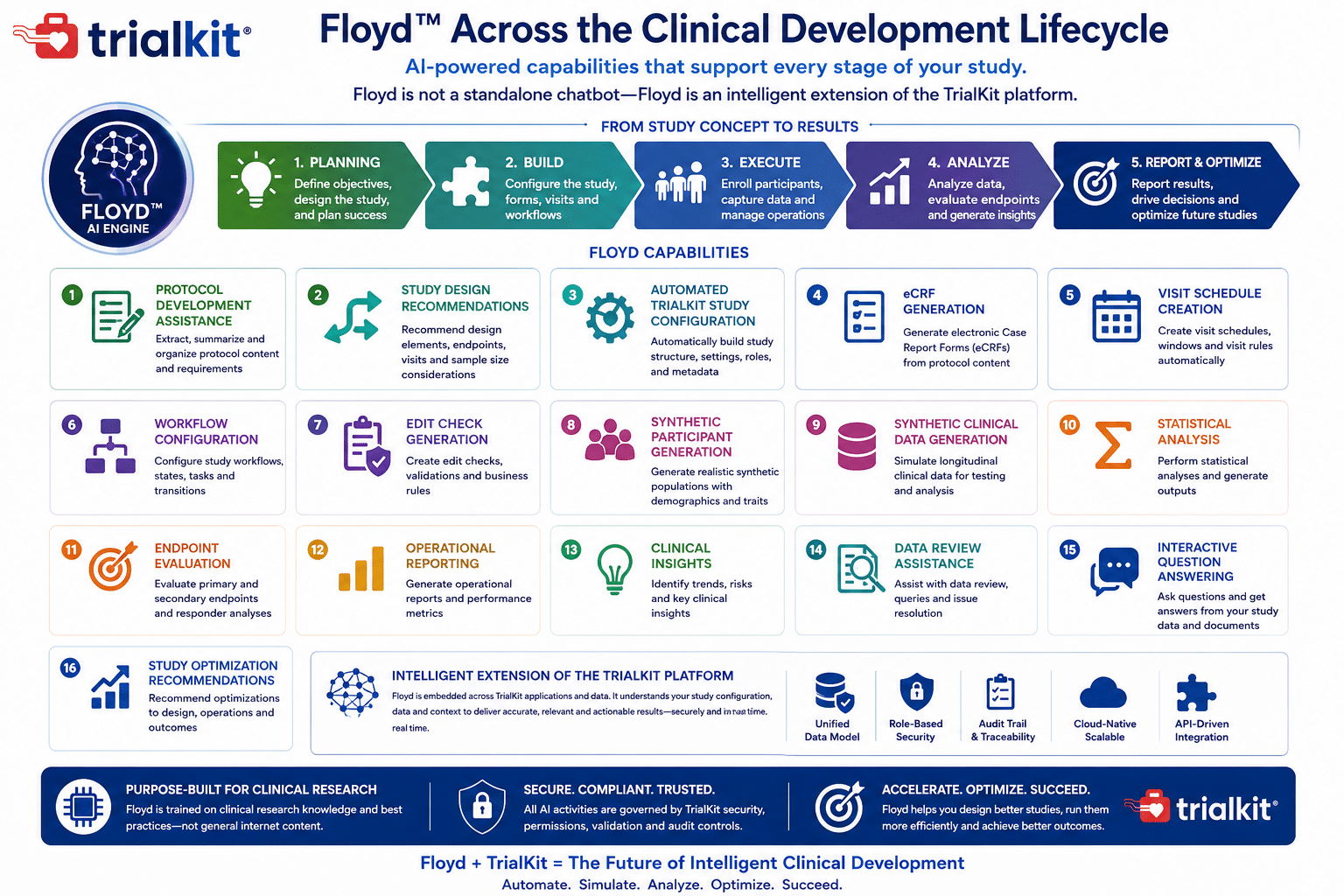
As clinical research continues to evolve, organizations will need more than additional data sources or faster reporting tools. They will need technology capable of connecting information across every stage of study development, from protocol planning and study design through execution, analysis, and continuous improvement.
Purpose-built AI supports that vision by helping researchers organize complex information, identify meaningful relationships, and generate insights that would be difficult to uncover through traditional workflows alone. Instead of spending valuable time moving data between disconnected systems, study teams can focus on understanding what the information is telling them and applying those insights to improve study quality and operational performance.
The future of clinical research will be defined by making better use of the data organizations already have. As AI continues to mature, its greatest contribution may be helping transform fragmented information into connected intelligence that supports faster, more informed decisions throughout the clinical research lifecycle.