
TrialKit AI: Intelligence for Clinical Trials
Design, build, simulate, and analyze clinical studies in one connected, insight-driven system. Embedded intelligence supports the full study lifecycle, from protocol development through study closeout.



What is TrialKit AI?
TrialKit AI is an embedded intelligence layer built directly into the TrialKit platform. It extends across the full study lifecycle, supporting study design, configuration, validation, simulation, and analysis.
Unlike external AI systems or standalone analytics tools, TrialKit AI operates within the same environment used to build and manage clinical studies. This allows CRF generation, validation, simulation, and data analysis to occur within the full context of the study’s protocol, forms, visits, and endpoints.
Powered by Floyd, the proprietary AI model developed by Crucial Data Solutions, TrialKit AI enables research teams to interact with their data using natural language, perform advanced statistical analysis, and simulate potential study outcomes before enrollment begins. These capabilities help sponsors and CROs move beyond traditional reporting toward a deeper understanding of how studies perform across their lifecycle.
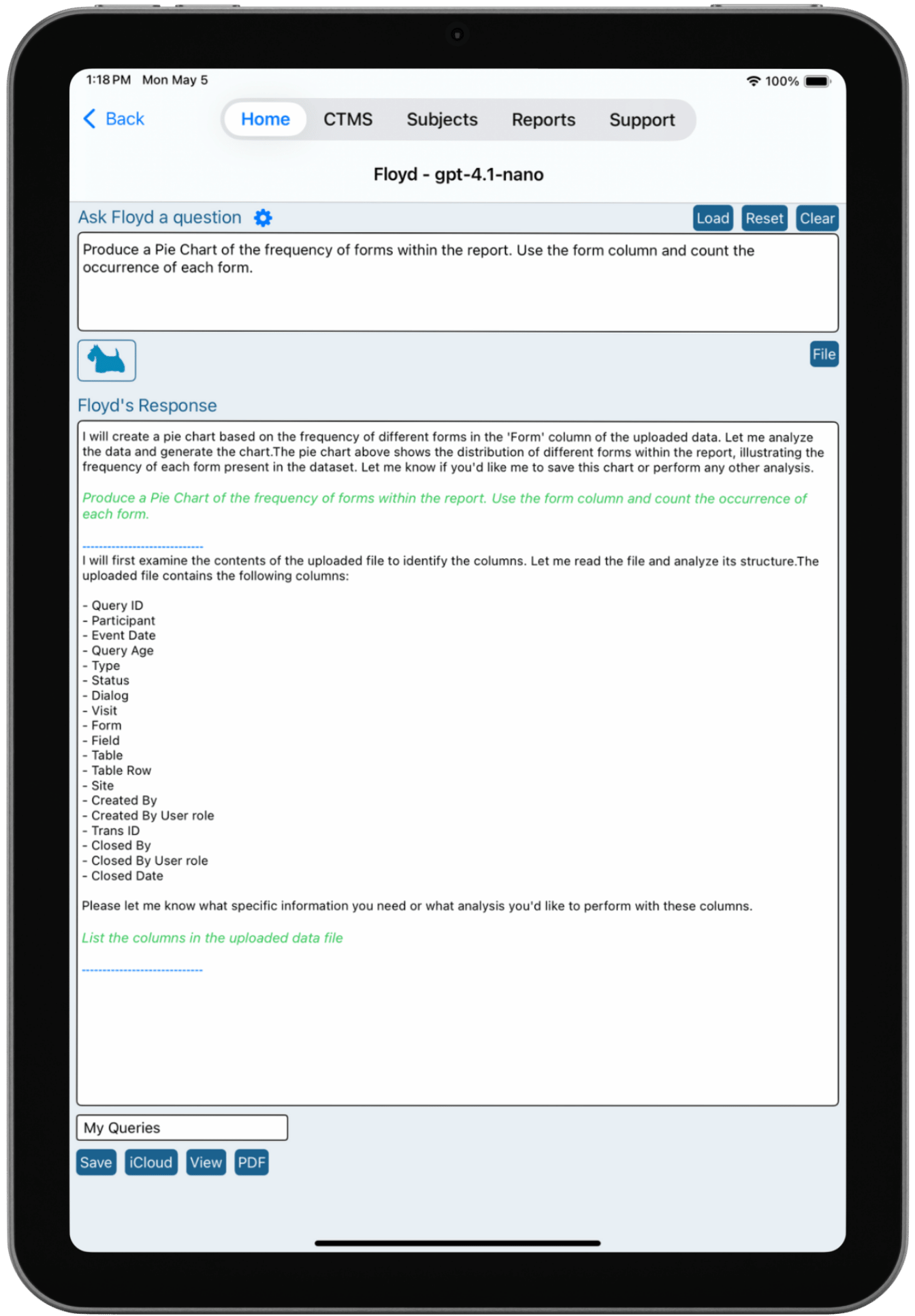
Powered by Floyd
The Proprietary AI Model Behind TrialKit AI
Floyd is a domain-aware AI model tuned from Google Gemini and designed specifically for clinical research. Unlike general AI systems that analyze flattened datasets, Floyd understands the structural architecture of clinical trials, including protocol logic, visits, forms, endpoints, and longitudinal data relationships.
Floyd powers intelligence across each stage of the study lifecycle, from initial design decisions through ongoing analysis. Rather than acting as a standalone tool, Floyd works directly within the same environment used to manage clinical trials, supporting each stage of the study lifecycle while keeping researchers in control of scientific and operational decisions.
Protocol Design & Ingestion
Generate draft protocols from study requirements or ingest existing protocols to serve as the foundation for study design and execution.
Study Design
Convert protocols into structured study architectures, including visit schedules, study workflows, endpoints, and data collection strategies.
Study Build
Automatically create study components within TrialKit, including eCRFs, unscheduled visits, eDiaries, edit checks, and supporting study logic.
Study Populate
Generate realistic synthetic participant populations and study data to support simulation, validation, and testing activities.
Study Validation
Evaluate study configurations, workflows, and data structures before go-live to identify issues earlier and reduce startup risk.
Study Analysis
Perform statistical analysis, explore study outcomes, evaluate treatment arms, and generate insights from both synthetic and live study data.
TrialKit AI Timeline Value
What if study setup didn’t take months? This comparison breaks down each step of a traditional workflow against an AI-enabled approach, revealing where timelines are dramatically reduced.
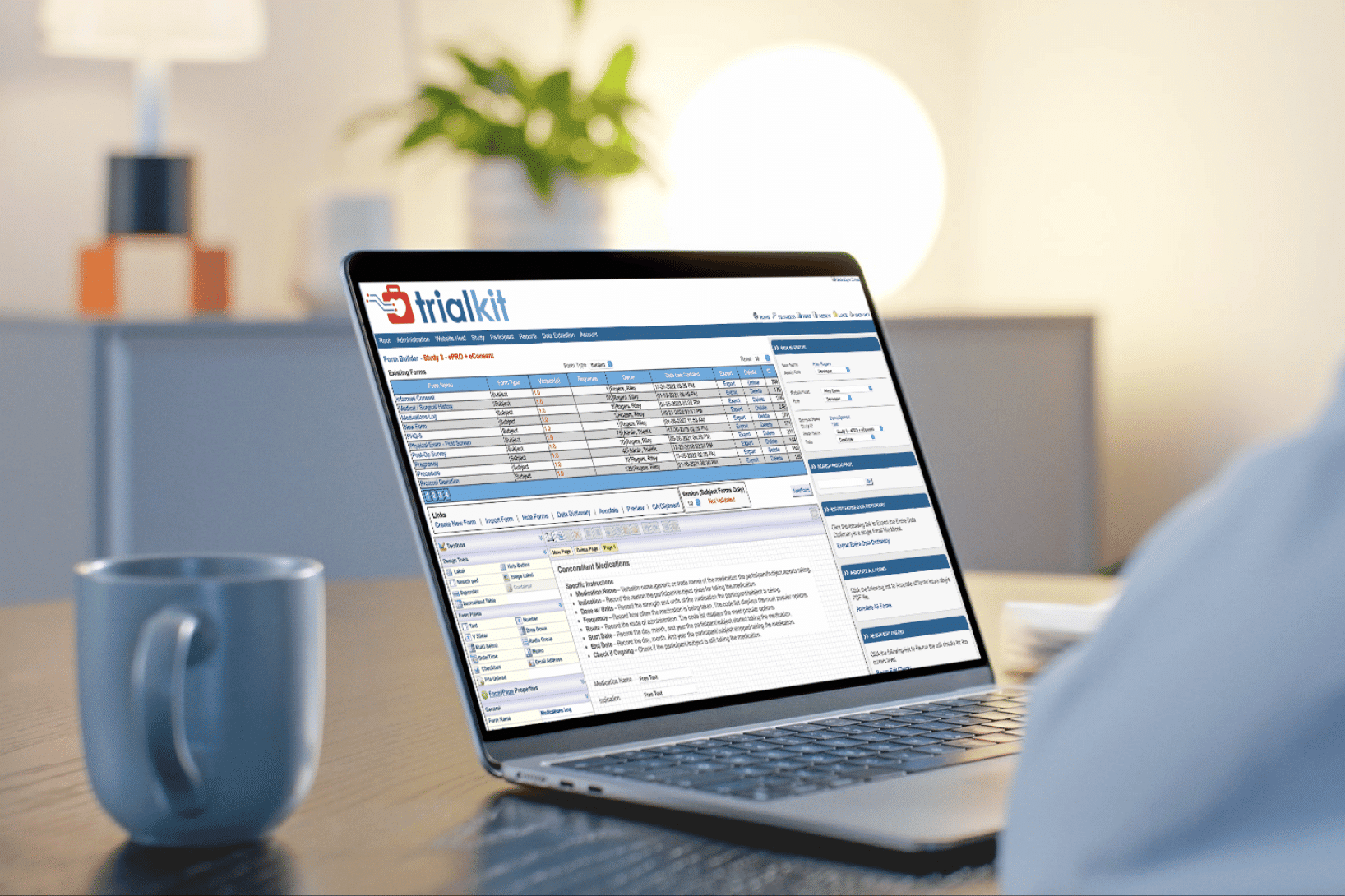
A Unified Platform with Embedded Intelligence
TrialKit is designed as a unified eClinical platform supporting the full lifecycle of clinical trials and non-interventional research. The platform includes:
- EDC
- eSource
- eCOA / ePRO
- eConsent
- eTMF
- RTSM
- Medical Coding
- PACS/Imaging
- Adjudication
- Virtual visits and scheduling
- Remote patient monitoring and wearable connectivity
- Analytics and reporting
TrialKit AI extends these capabilities with embedded intelligence powered by Floyd. Because these capabilities operate within the same platform where study data is captured and managed, research teams can design, simulate, validate, analyze, and interpret studies without exporting datasets or relying on separate tools.
This unified approach allows organizations to both execute and understand their clinical trials within one connected system.
Why Choose TrialKit AI for Your Clinical Trials?
Clinical research teams are under constant pressure to launch studies faster, reduce operational burden, and make more informed decisions. TrialKit AI helps organizations achieve these goals by embedding intelligence directly into the workflows used to design, build, validate, and analyze clinical studies.
Accelerate study setup & configuration
Reduce the time required to move from protocol to fully configured study through AI-assisted design, eCRF generation, and automated study build.
Validate study design early
Identify issues in protocol configuration, CRF structure, and study setup before study startup. Reduce the need for mid-study adjustments and improve overall study quality.
Enable simulation-driven study planning
Model full study scenarios using synthetic participant populations that reflect real-world variability. Evaluate protocol assumptions, inclusion criteria, and endpoint behavior before execution begins.
Analyze data without delay
Perform advanced statistical analysis directly within the platform. Assess treatment arms, identify trends, and generate insights without waiting on external reporting workflows.
Work within a single unified platform
All capabilities operate within the TrialKit environment used to design and manage studies. There is no need to export data or rely on separate systems.
Support more efficient, informed trials
By enabling earlier evaluation and faster analysis, TrialKit AI helps teams reduce uncertainty, improve decision-making, and execute studies with greater confidence.
Get Started with TrialKit AI Today
Explore how TrialKit AI helps research teams simulate studies, analyze data, and uncover insights faster within the unified TrialKit platform.